
The use of altered states of consciousness (also known as holotropic states: a form of inner technologies) throughout human history has been deeply rooted, rich, and extraordinarily fascinating. In The Way of the Psychonaut, Grof traces these states back to the paleolithic era (old stone age) as evidenced by pre-historical cave paintings depicting shamanic trance episodes and mythical creatures encountered during them. Millenia old indigenous cultures (e.g. the African Kalaharis) were highly developed in their ways of accessing and cultivating non-ordinary states of being with a combination of chanting, drumming, dancing, rhythmic breathing, plants, etc. According to Campbell in The Hero with a thousand Faces, such ritualistic activities were a normal on-going feature of life and key to curing ailments, healing individual and collective traumas, and connecting to higher realms for creative inspiration, insight, and spiritual fulfillment.
The variety and depth available in the artistic renderings of holotropic states suggest that these pre-historic civilizations have attained an exceptionally high degree of sophistication in the knowledge of plants as medicine, discernment in the multitude and varied states of consciousness a human can inhabit, and most importantly a profound and layered understanding of true human nature. These civilizations seem to have understood in a quite unique and holistic way the in-born needs of humans to live spiritually fulfilled lives, periodically transcend and make contact with the divine, creatively and authentically self-express, heal wounds and hurts, and love. Our current thinking has generally looked down on these cultures because they have seemingly kept their living simple and outward reach modest. Since they haven’t built skyscrapers, airplanes, nor computers that we can locate, we think of these civilizations as rudimentary, which may have played a massive role in the disregard, disinterest, and devaluation of their powerful inner technologies. One might wonder, however, if their humble outer lives were proportioned by an intense inward focus, unlocking for them levels of potential that we may not be able to imagine today.
As we advance into antiquity to pre-dynastic Egypt, ancient Greece, and the Roman era, the use of holotropic states becomes even more fascinating. These civilizations invented most of the foundational sciences, philosophy, the fine arts, and left us feats of architectural engineering that remain non-replicable even today (e.g. the great pyramid of Giza). These societies seem to have embodied equally rich inner and outer lives and thus considered highly evolved by any modern standard. Yet Grof reports that these civilizations, too, made frequent and routine use of altered states of consciousness. These rituals and ceremonies were fully and naturally engrained in their cultural calendars, religious services, and social folklore. They were induced via plant medicines (e.g. Kykeon), breath, and sound for the purposes of healing individuals and collectives, insights, inspiration, and connection to higher realms. Though Grof mentions that such ceremonies would take place every five years, Hall in his Secret Teachings of All Ages impressively documents that such temples were open and conducting ceremonies daily and uninterruptedly, and have been for hundreds of years, estimating the number of participants to be in the hundreds of thousands if not more. That these highly refined civilizations kept and made regular use of these inner technologies should give us pause. Could it be that ancient Egyptians built the pyramids out of great insights from higher realms? Did the ancient Greeks invent philosophy and poetry out of divine inspiration? Or did the exquisite levels of health, peace, and equanimity these societies enjoyed give them the ability to access new levels of human intelligence? Hall points out that the most illustrious minds (e.g. Pythagoras, Aristotle, and Marcus Aurelius) were in fact initiates of these rites.
With the advent of organized religions, such rituals were decimated, temples destroyed, and knowledge driven from common place to the realms of heresy. Interestingly, Grof hints that their founders may have had sacred experiences of holotropic states that later formed their religion. Through prayer, deep contemplation, and even plant medicine (as evidence by early Christian paintings of sermons on mushroom mountains), these original founders may have aimed at sharing these inner technologies through direct unmediated sacred experiences. Allegro in The Sacred Mushroom and the Cross went as far as suggesting that the remnant Christian eucharist originated from a psychoactive substance (amanita muscaria) that induced trance in early Christan rites and that it disappeared once religious orders became larger and more organized.
As Christianity rose and the Roman empire fell, the dark ages ensued and these states were relegated to the realm of the occult altogether. Fast forward through the Renaissance, scientific revolution, all the way to the dot com revolution, we find today that such practices have disappeared so entirely from our cultural DNA, most of our historical record, and much of our collective consciousness that they seem utterly fantastical, quickly dismissed as suspicious, and, anyway, we are all far too busy to even inquire. It is bewildering to observe that the majority of human history was lived in bodies and minds that regularly experienced holotropic states. Our postmodern era seems to be a great anomaly in the long history of human evolution: limiting our bodies and minds to only one realm, a handful of states of consciousness (e.g. awake, asleep, dreaming), and an impoverished view of what is real and what can be possible. Why haven’t we needed these states in the last few centuries and today? Have they become obsolete to the modern human? Or are we in desperate need of them, yet oblivious that such potentialities even exist?
I propose that the modern human has lived in an era of prolonged exponential economic growth which brought it enormous material comfort but also kept it fixated on an endless momentum of external production and acquisition. As a result of this strong external momentum, we have become disengaged from any internal orientation and oblivious to our inner needs. In addition, our advanced technologies have become so impressive and complex that they seem to be proof that this modern life is a true and unparalleled success story. Therefore, why would we venture to look for anything else, let alone some obscure non-silicone-based technology from millennia past? Furthermore, the Cartesian revolution has us convinced that the mind is master and that our bodies are simple vehicles and our soul an obsolete childish concept. Consequently, we should be uninclined to be interested in any technology that does anything more than focus exclusively on our brain (the left hemisphere that is). Lastly, just like the four-minute mile was thought to be impossible until it was successfully attempted, we may be sorely unaware that we can inhabit other states of consciousness and completely clueless about their formidable possibilities.
However, all these forces appear to be at a tipping point and have started to work against us. Our hypergrowth economic engine is running on fumes. Our advanced technologies are distracting, numbing, and hypnotizing us all at once. Our right brains and the rest of our alienated self is calling us back with symptoms of mental health deterioration, apathy, and numerous crises. Is the outer world reflecting back to us the great disequilibrium within us? Is nature asking of us to expand, exceed, and even transcend our current way of living our human nature?
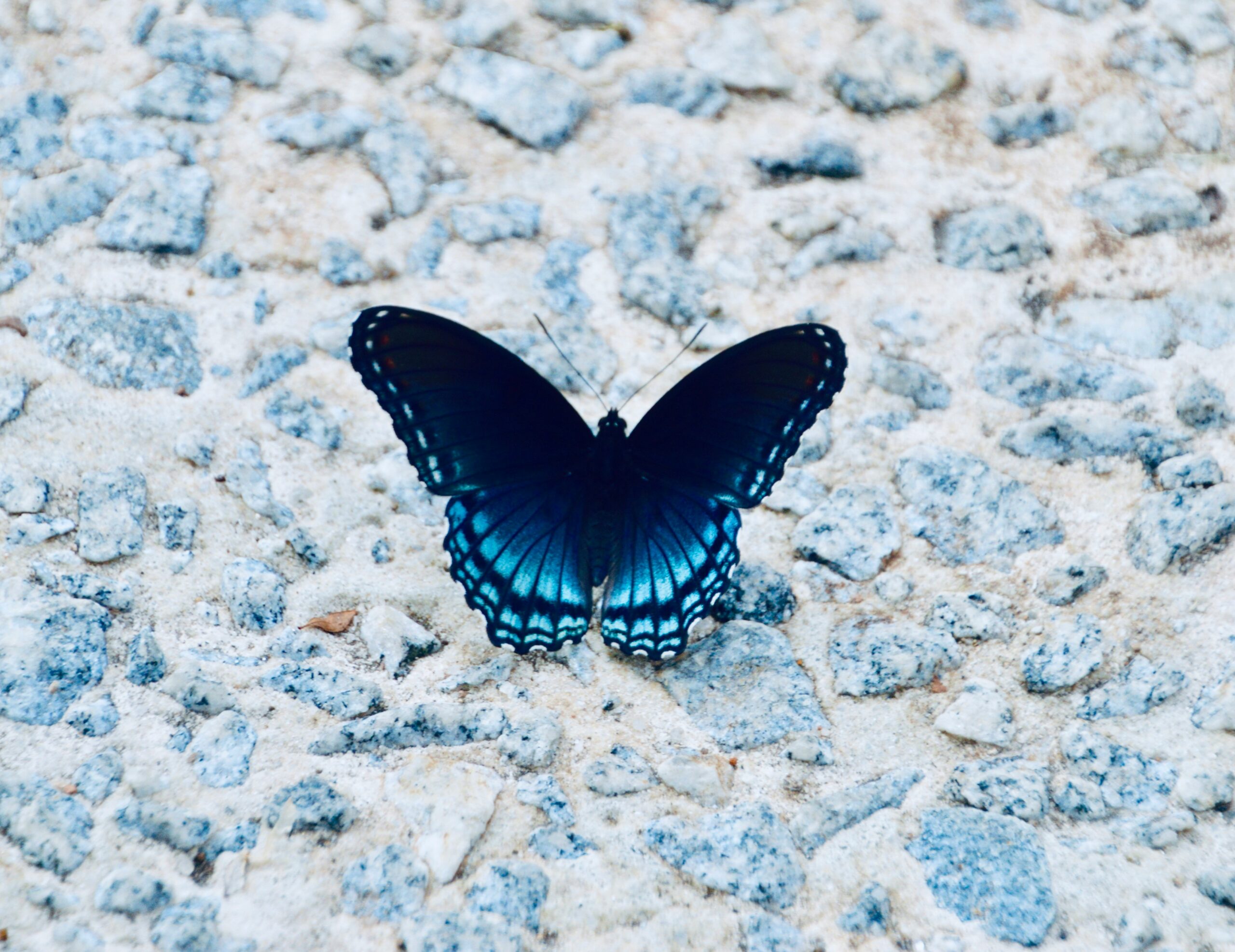
Nature has arranged for the caterpillar, without the caterpillar’s permission, awareness, or desire, to completely disintegrate itself into a muddy soup, reassemble itself anew, and emerge into a beautiful butterfly that can fly. A key moment in this radical transformation is the pupa stage: where the chrysalis looks completely dark, gooey, and lifeless. Anyone looking at the pupa would understandably conclude that all is destroyed, lifeless, and final. However, scientists measuring heat, metabolic rate, and micro kinesthetic movements conclude that life never ceased. The lifeless pupa stage is not only full of life, but is seeding, gestating, and creating an elegant lifeform that can take flight. I wonder, if nature asked the caterpillar if it wished to fly for its own evolution, would it accept? I can imagine the caterpillar politely declining and going on to its next green leaf.
Like the pupa, we humans are clearly at the verge of our next evolutionary stage, and it seems to be a colossal one. The Arab Spring, the “#me too” movement, the “Black Lives Matter” uprising, the numerous wars, all seem to have been but early amuse-bouchées to a much longer and elaborate feast ahead. I have faith in human beings, and most of all I have faith in nature. Just as it did for the caterpillar, it may have endowed us with secret treasures and capabilities that far surpass our knowledge, imagination, and what our intellect can fathom. No wonder the oldest maxim in the world remains the wise and powerful: “know thyself”. Perhaps we should start there, turning inward privately and as a collective. These holotropic states can be key catalysts, accelerators, and a proven planform of the pupa stage we find ourselves in. We should have the wisdom to use them.
References
Allegro, J. (1970). The Sacred Mushroom and the Cross. Hodder & Stoughton.
Campbell, J. (1949). The Hero with a Thousand Faces. Bollingen Foundation.
Grof, S. (2019). The Way of the Psychonaut. MAPS.
Hall, M. (2025). The Secret Teachings of all Ages. Dover Publications.